Japanese Laundry Symbols Explained: How to Wash Re-dyed and Dark Clothes Without Fading

Key points
- Japanese care labels use five basic symbols (washing, bleaching, drying, ironing and professional cleaning), combined with lines, numbers, dots and crosses.
- Since Japan's care-label standard was revised in August 2024 to match the international standard ISO 3758, the symbols on clothes sold in Japan mean the same as those used abroad.
- To keep re-dyed or dark clothes from fading: wash them separately for the first few washes, skip bleach, turn them inside out and dry them in the shade.
- somete is a clothing re-dye upcycling platform in Japan that works with around 40 dye workshops to give faded clothes a new color.
If you are staying in Japan for a few weeks, sooner or later you will do laundry here, whether in your apartment, your hotel's guest laundry or a neighborhood coin laundry. You may also bring home clothes bought in Japan, with care labels written partly in Japanese. This guide explains how to read those labels, and how to wash dark or re-dyed clothes so their color lasts.
Japanese care labels: five basic symbols
In Japan, the symbols on care labels (called sentaku hyoji, "laundry marks") are set by the Japanese Industrial Standard JIS L 0001. The current style of symbols has been used since December 1, 2016. In August 2024 the standard was revised again to align with the international standard ISO 3758, and according to Japan's Ministry of Economy, Trade and Industry (METI), the care symbols on textiles in Japan and abroad now carry the same meaning.
So if you already know the care symbols used in Europe or many other countries, Japanese labels will look familiar. According to Japan's Consumer Affairs Agency, every label is built from five basic symbols:
| Symbol | What it means |
|---|---|
| Wash tub | Home washing, by machine or by hand |
| Triangle | Bleaching |
| Square | Drying (a circle inside means tumble drying; lines inside mean natural drying) |
| Iron | Ironing |
| Circle | Professional dry cleaning or wet cleaning |
These are combined with a few extra marks:
- A number in the tub: the maximum water temperature in °C (for example 30, 40 or 60).
- One or two lines under a symbol: one line means "gentle", two lines mean "very gentle".
- Dots: the temperature for tumble drying or ironing. More dots mean a higher temperature is allowed.
- A cross (×): do not do this.
- A hand in the tub: hand wash only.
One rule that surprises many people: if one of the five basic symbols is missing from the label, it means every treatment in that category is allowed.
What changed in 2024
Labels attached from August 20, 2024 follow the revised standard. According to the Consumer Affairs Agency, the changes most relevant to everyday laundry are:
- Hand washing: there are now two hand-wash symbols, one for water up to 40°C and one for water up to 30°C (marked with the number 30).
- Ironing: one dot means a soleplate temperature up to 120°C, two dots up to 160°C, and three dots up to 210°C.
- Ironing without steam: the one-dot iron symbol is now split in two: one that allows steam, and one with an extra mark meaning “no steam”, used for clothes that steam could damage.
Clothes in your wardrobe may carry labels from different periods, including the older Japanese-only symbols used until November 2016. When in doubt, the Consumer Affairs Agency publishes the full list of symbols (in Japanese) on its website.

Three things to check on dark or re-dyed clothes
For black, navy and other dark garments, and for anything you have had re-dyed, three parts of the label matter most for keeping the color:
- Water temperature: the number in the tub is an upper limit, not a recommendation. Washing in cold or lukewarm water is gentler on color.
- The bleach triangle: even if bleaching is allowed, we recommend not using any bleach on re-dyed clothes (more on this below).
- Drying: a square with a diagonal line in the corner means "dry in the shade". Sunlight (UV) fades dyes, so shade drying is a good habit for dark clothes even when the label does not ask for it.
The fiber content (cotton, linen, polyester and so on) is usually printed near the care symbols. Fiber matters for dyeing too: plant-based fibers such as cotton, linen and rayon take dye well, while synthetic fibers such as polyester take very little.
Five ways to keep re-dyed clothes looking good
Clothes re-dyed by somete can be washed as usual. These five habits will help the color last longer.
1. Wash separately for the first few washes
For the first few washes after dyeing, some excess dye may come out and transfer to other clothes. Keep re-dyed items away from whites and light colors. Hitachi's washing machine FAQ gives similar advice for dark cotton shirts and jeans in general: wash them separately and avoid long soaks.
2. Skip the bleach
Chlorine bleach removes color, and even oxygen bleach, often sold as "safe for colors", can lift dye when used undiluted, for long soaks or in hot water. Please do not use either type on re-dyed clothes.
3. Turn clothes inside out
Friction in the washing machine wears away color and can leave a whitish, scuffed look on the surface. Washing garments inside out protects the outer face. "Wash inside out" is one of the extra instructions that Japan's Consumer Affairs Agency lists as examples brands can add next to the symbols. A mesh laundry net (sentaku netto) also helps.
4. Dry in the shade
If you dry laundry on a balcony or by a sunny window, keep in mind that strong sun slowly fades color. Hang re-dyed or dark clothes inside out, out of direct sunlight.
5. Don't over-wash
Every wash rubs away a little color. Knitwear and jackets often don't need washing after every wear: brushing them and airing them in a well-ventilated, shaded spot keeps them fresh.

When the color fades anyway: re-dyeing
Even with careful washing, color changes over years of wear. That is part of living with clothes for a long time. But when you still love a garment's shape and feel and the only problem is its color, re-dyeing it in a darker shade can make it wearable again.
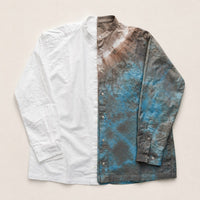
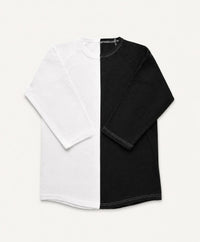
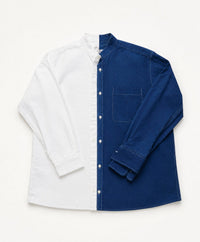
In Japan there is a long tradition of mending rather than discarding, and re-dyeing is a way of mending color. A faded denim shirt can become a deep blue, and a washed-out T-shirt can become black again. Some details, such as polyester stitching, printed logos and buttons, may stay their original color, which often adds character.

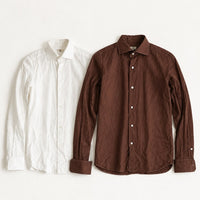
Re-dyeing works best in this direction: from light to dark. A pale or faded garment can become black, indigo or brown, but a black garment cannot be made white. Results also vary with the fabric, the original color and any stains, so each piece comes out a little different.
About somete
somete is a clothing re-dye upcycling platform based in Japan. We work with around 40 dye workshops across the country, including craftspeople who use traditional techniques such as kurozome, the deep black dyeing used for Japanese formal kimono, and Japanese indigo. Customers send their clothes by post, and prices start from ¥5,500 per item (tax included). It usually takes about six to eight weeks from the time your garment arrives, and an express option (about two weeks) is also available.
Plans designed for visitors to Japan, such as Travel Express and Ship it home, are coming soon. If you are staying in Japan and would like to ask about re-dyeing a piece, please feel free to contact us.
A little care on laundry day protects the color you love. And when it fades, re-dyeing lets you keep wearing it. We hope this guide helps your favorite clothes stay with you for a long time.
Sources
- Consumer Affairs Agency, Japan: Care labelling symbols (from August 20, 2024) (Japanese)
- Consumer Affairs Agency, Japan: Care labelling symbols (December 1, 2016 to August 19, 2024) (Japanese)
- Ministry of Economy, Trade and Industry: JIS established and revised (August 2024) (Japanese)
- Hitachi home appliances FAQ: removing dullness, yellowing and color transfer (Japanese)
Written by the somete JOURNAL editorial team
お気に入りの服、染め直してみませんか?
色褪せ・黄ばみ・シミで着なくなった服も、職人の手でもう一度着たい一着に。
素材や色選びに迷ったら、お気軽にご相談ください。
Black November|November only
Free return shipping on orders placed by November 30
Shipping your re-dyed clothes back to you is free (normally ¥800).
メールでのご相談はお問い合わせフォームから
この記事に関連する染めプラン
 ¥6,980〜
 ¥7,980〜
 ¥6,980〜
 ¥5,500〜