
About the clothing dyeing and upcycling platform "somete" and the world view we aim for

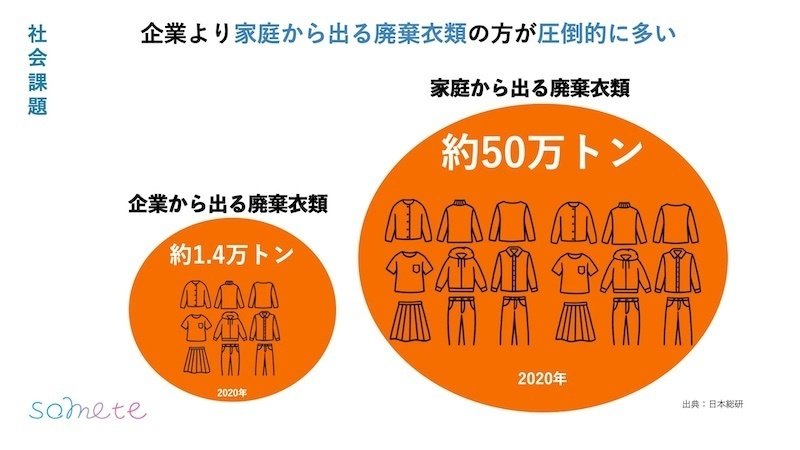
Apparel waste (clothing waste) has recently been raised as a major social issue. Did you know that the majority of this waste comes from households? Somete , an upcycling platform for clothing re-dyeing, is tackling this household apparel waste with the keyword "re-dyeing . "
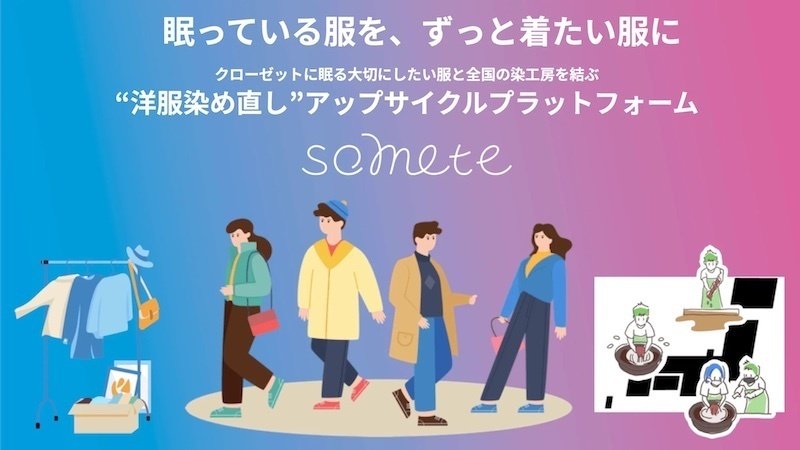
With the catchphrase "Turn your sleeping clothes into clothes you'll want to wear forever," somete works with about 40 workshops and creators across the country to provide a clothing "re-dyeing" service. In this article, the somete editorial team spoke to Yuji Aono, CEO of Play Blue Co., Ltd., which operates somete, about the background of the creation of somete and the service. In addition to learning about its appeal, we also heard about the efforts of the Apple Cycle Community "Machi Closet," which works with the local community to reduce apparel waste.
[People who listened to the story]
After graduating from university, she worked at fashion advertising agencies and major advertising companies before becoming a freelance PR planner/editor. Later, while working as an editor for owned media at a startup, she developed an interest in circular regional economies and in 2018 launched a local story media outlet as a side job. She has produced "cup curry" that lets you "savor the story of local vegetables in a single cup of curry" and hosted talk events to consider the future of the local area. Using the experience she gained from her work at the local media, she launched "somete," a service that aims to "preserve dyeing culture" and "reduce clothing waste," as a side job. Her project was selected by Startup Studio by Creww, Shibuya QWS, and the OPA Accelerator Program 2021. She won the Gaiax Startup Studio Award and the Jury Prize at the crQlr Awards 2022, a global award for designing a circular economy.
■ Clothes sleeping in your closet are brought back to life by dye artisans
somete Editorial Department : What was the motivation behind launching "somete," which began service in March 2022?
Aono : The core of "somete" is to reduce apparel waste within the home and revitalize local industries. By re-dyeing the precious clothes that have been sitting in our closets, we aim to reduce clothing waste and at the same time, we are focusing on passing on Japan's proud dyeing culture.

somete Editorial Department : By the way, why did you come up with the solution of "re-dyeing" to reduce apparel waste?
Aono : Previously, as a side job, I started my own local media outlet to cover players active in my hometown of Koshigaya, Saitama Prefecture. That's when I met someone from an indigo dyeing workshop and experienced the charm of indigo dyeing for myself.
The collar of a white shirt that I had received for my birthday and had been wearing with care had turned yellow, and I had nowhere to put it in my closet.

I was hesitant to wear it outside, but I couldn't bear to throw it away... As I was pondering what to do, I decided to ask an indigo dyer to re-dye it.
When I received the shirt two weeks later, I was honestly surprised. The yellowed white shirt had turned a beautiful indigo blue, and it was quite a shocking surprise.

somete Editorial Department : That was the moment I became fascinated with indigo dyeing.
AONO : That's right. My own experiences were the inspiration for "somete." At the same time, indigo dyeing was declining due to the spread of chemical dyes, and I had heard from artisans that "indigo dyeing culture is facing a crisis of survival."
Koshigaya City, Saitama Prefecture, once flourished as a major indigo dyeing production area, and although there were once hundreds of indigo dyeing workshops, it seems that only one remains today. As the craftsmen age, it is becoming increasingly difficult to find successors. One of the main pillars of "somete" is to revitalize the dyeing industry, which is in such a difficult situation.
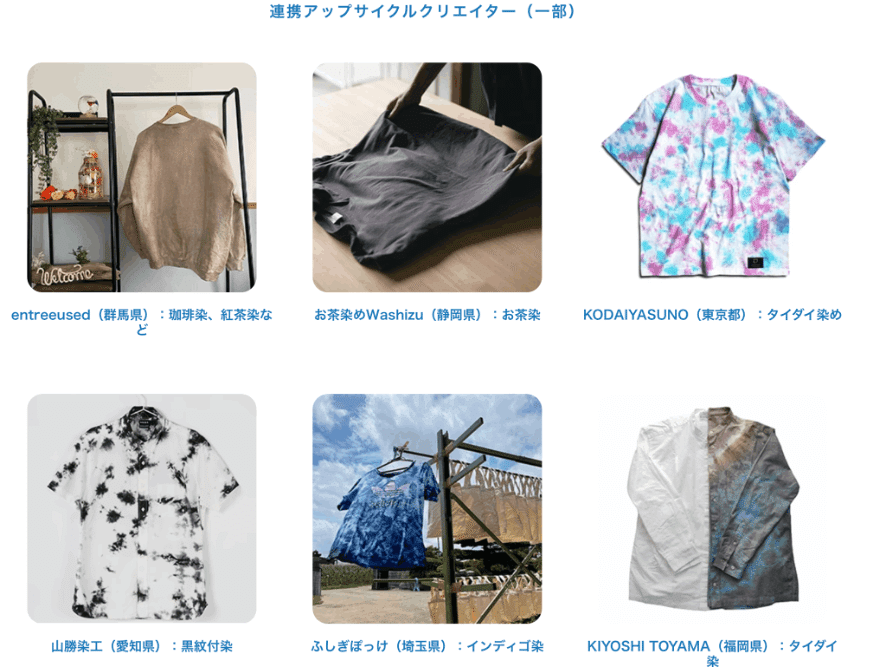
Initially, we were thinking of developing products and services that focused on indigo dyeing, but as we researched, we learned that there are workshops across the country that use a variety of dyeing methods, including traditional crafts such as black crested dyeing, ``strawberry dyeing'' using discarded strawberries, and ``coffee dyeing'' using discarded coffee grounds.
Somete was started with the idea that it would be great if we could turn these workshops into a platform where clothes that would otherwise be discarded could be re-dyed and worn again.
■We partner with approximately 40 dyeing studios that specialize in dyes made from natural materials.
somete Editorial Department : What do you think is the appeal of somete?
Aono : I think it's the fact that we've created a network with around 40 dyeing studios across the country and created a platform. I think this is probably the first such initiative in Japan.
One of our particular concerns is that we work with studios that place an emphasis on the global environment, such as dyeing with natural dyes instead of chemical dyes.Many studios also contribute to reducing food waste by using food that would otherwise be discarded as dyes.
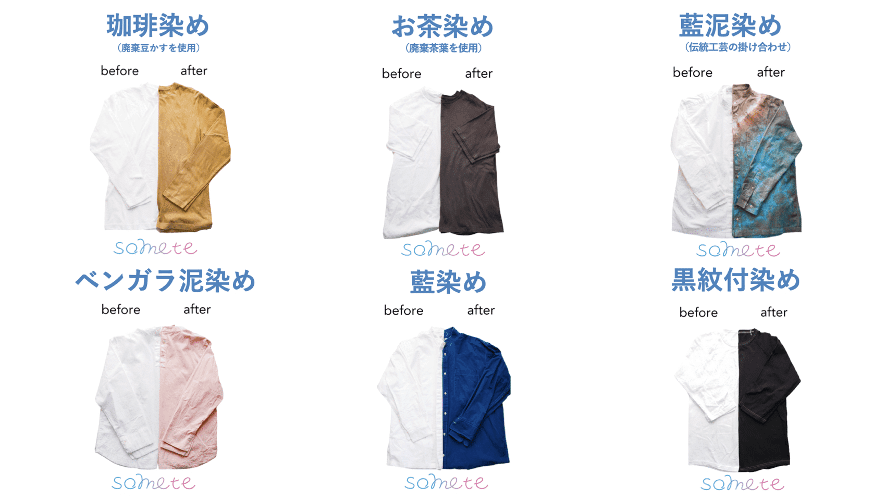
somete Editorial Department : There are a wide variety of colors that can be dyed, including pale pink and a brown that's close to the color of coffee, so it's nice to have a variety of options.
Aono : Everyone has their favorite colors, and I think one of the features of "somete" is that users can re-dye it to their favorite color.
somete Editorial Department : What type of users are most likely to be using the service?
Aono : Most of our customers are women and men in their 20s and 30s, but we also get a lot of orders from women in their 50s and 60s.
somete Editorial Department : Personally, I get the impression that there are a relatively large number of people in their 50s and 60s who like dyeing, but on the other hand, what do young people in their 20s tend to use "somete" for?
AONO : People may simply be looking for entertainment value, or a completely new content experience. It's exciting to see how your own clothes will turn out, and dyeing has a unique quality that only hand-made craftsmanship can offer, giving you the joy of seeing them transformed into unique colors.
Even people who are not familiar with dyeing culture often try it casually because it seems like fun. There are also people who are interested in the SDGs and use the service.
somete Editorial Department : Transforming "dyeing culture" into entertainment is a perspective we've never seen before. Enjoying dyeing culture like entertainment may be a new approach.
Aono : We hope that people will enjoy this unprecedented content experience, and ultimately aim to create a worldview that is "good for the global environment" and "cool."
■ "Machi Closet" initiative to reduce clothing waste throughout the community
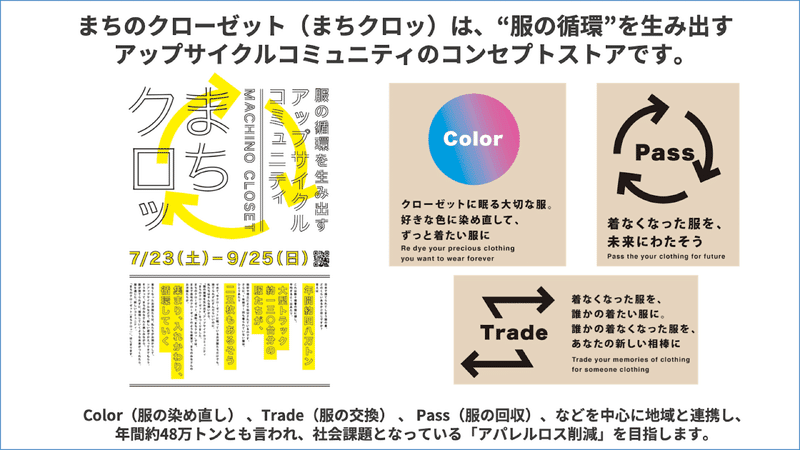
somete Editorial Department : While somete is working to reduce apparel waste within the home, it seems that you have also launched the " Machi Closet " (hereafter referred to as "Machi Closet"), which aims to contribute to reducing apparel waste throughout the community. Could you briefly tell us about the activities of "Machi Closet"?
Aono : "Machikuro" is a limited-time concept store that aims to "create a clothing circulation system" and reduce apparel waste through the following three themes: "Color (re-dyeing clothes)," "Pass (collection of clothes)," and "Trade (exchange of clothes)."
It was launched with the aim of "collecting, replacing, and circulating clothes that local people no longer wear, just like a closet at home." It has only been held once so far, but the first event was held at Takasaki OPA from July 23rd to September 25th, 2022, in collaboration with OPA Co., Ltd.
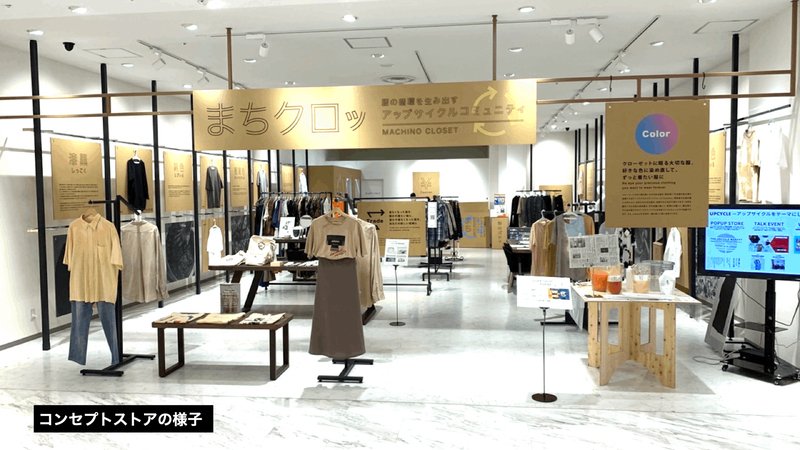
somete Editorial Department : What kind of services did you offer at the limited-time shop?
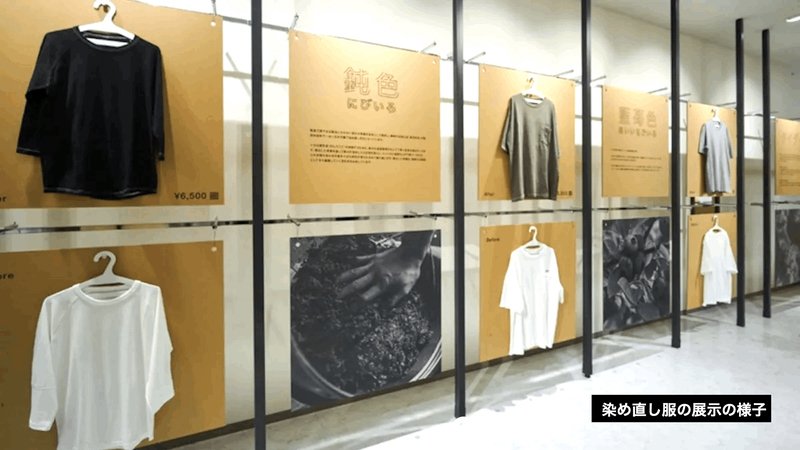
Aono : In addition to exhibiting and selling before and after photos of re-dyed clothing and selling upcycled brand products such as fashion, accessories, and tumblers, we planned a variety of events, including a "clothing barter" event and workshops where people could try re-dyeing clothes using a vinyl pool.
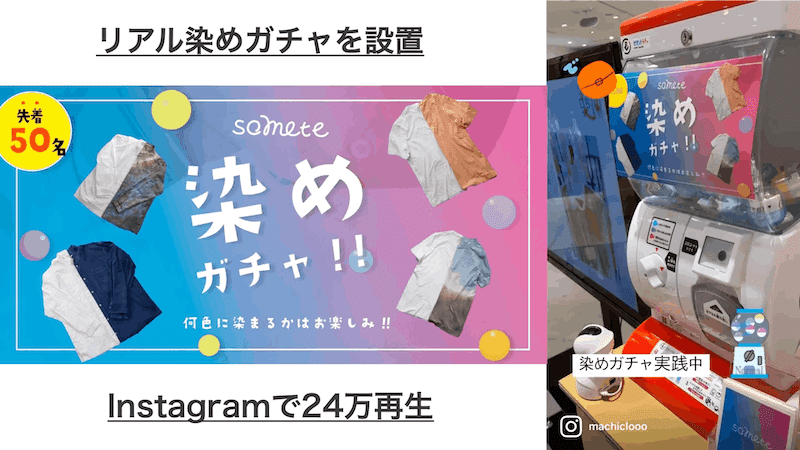
Among them, the "dye gacha" capsule toy, which allows you to turn the handle and re-dye your item in a randomly selected color from five different colors, has been viewed 240,000 times on Instagram and has become a hot topic.
somete Editorial Department : The "clothing barter" event allows you to bring in clothes you no longer wear and take home up to three pieces of clothing brought by other people. It's an interesting project that really creates a circulation of clothes.
Aono : Thank you. This is a collaboration with Rationaloop, which runs a clothing bartering event mainly in Tokyo. There are many young participants in Tokyo, and by collaborating with them, we hoped to attract more people from Generation Z and millennials (those in their 20s and 30s) to join us.
If more people participate, the amount of clothing that is thrown away will decrease, and I think one of the attractions of Machikuro is that it creates a positive cycle throughout the community.
somete Editorial Department : How did you feel about the first event?
Aono : To be honest, we still have a long way to go (laughs). When commercializing something, it is necessary to balance social and economic benefits, so while Machikuro is a highly social initiative, the challenge for the future is how to make it viable as a business.
However, it was a great benefit to be able to identify the issues, and it also gave me some good hints to consider when developing "somete."
Many of the people who participated in the "clothing barter" event held this time were in their 20s and 30s, and as a result, we received orders for re-dyeing and participated in the "dye gacha" (dyeing gacha), and it was a new discovery to see the trend of using the "somete" service as a starting point for the "clothing barter."
We feel that in the future, allowing many people to experience the fun of upcycling through real-world settings such as pop-ups will be a hook for expanding our efforts.
■ Distributing unique Japanese content to the world
somete Editorial Department : What kind of developments do you have in mind for the future?
Aono-san : In the future, we aim to expand overseas. We would like to promote Japanese dyeing culture to people overseas and create a flow that allows people all over the world to access "somete."
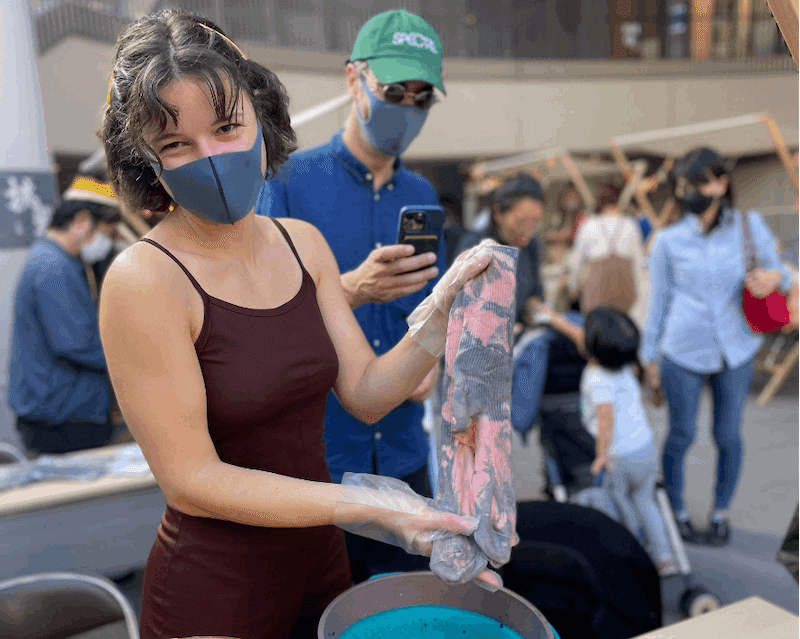
When we participated in the Shibuya Mottainai Market held in Shibuya last October, we received unexpected positive feedback, with foreign tourists participating in re-dyeing workshops and purchasing re-dyed clothing.
somete Editorial Department : In environmentally advanced countries such as European countries, the "somete" service may resonate in the context of apparel waste.
Aono : That's right. I feel that the approach of disseminating uniquely Japanese content to the world has great potential as a future market.
somete Editorial Department : After listening to your story, I think we can expect somete to play a role in solving the social issue of apparel waste while also promoting Japan's forgotten culture (dyeing culture) to the world.
Aono : That's exactly the world we're aiming for. I feel that somete is a service that can help reduce apparel waste around the world while preserving traditional Japanese culture.
We've just started, but we're also preparing collaborations with various brands to make the service accessible to more people, so we hope you'll look forward to future developments.
[Service Information]
"somete" clothing dyeing and upcycling platform
If you would like to know more about "somete" and "PlayBlue", please see here.
・Somete, a clothing dyeing and upcycling platform, respects diversity and delivers Japanese culture to the world. | PlayBlue JOURNAL
・ Sharpen your senses and create a cycle. Thinking about waste disposal sites, hints for a circular world | IDEAS FOR GOOD
・crQlr Summit 2023 JAPAN Event Report | LOFTWORK
